
February 20, 2026
How to Wrap a Pallet
Pallet wrapping is an essential process for securing goods during transportation and storage. Whether pallets are wrapped manually or with a pallet wrapping machine, the objective is to bind items together to create a stable and protected unit preventing movement or shifting during transit. To wrap a pallet, the process begins by attaching stretch film to the base of the pallet and spiralling it upward, overlapping each layer for consistent coverage. The key principle of pallet wrapping is to achieve sufficient containment force through the tension of the film, the quality of materials and the number of layers applied without crushing the items. Mastering these elements ensures the goods remain secure and transportation efficiency is maximised.
Types of Pallet Wraps
Before wrapping, it is important to choose the right pallet wrap or stretch film for your needs. Alongside wrapping techniques, the type of stretch film you use is essential to ensure stability and safety. Stretch wrap or film is the extremely elastic plastic wrap that is stretched around the products on the pallet. The type of stretch wrap used depends on whether the pallet is being hand wrapped or with a machine. When pallets are being wrapped by hand, they need thicker and more elastic films. Machine wrapping, on the other hand, requires a thinner, pre-stretched film, ideal for speed and consistent tension.
Hand Stretch Wrap
Manual pallet wrapping is the process of wrapping goods and securing them to a pallet by hand. It relies on the strength and control of the worker, so the stretch film needs to be easy to handle. These films are usually smaller and lighter but thicker than machine stretch wraps. The main types of films used for manual wrapping are:
- Cast hand stretch film: This stretch wrap is made using a casting process. It offers excellent clarity, good cling and stretchability. This type of cast hand stretch wrap is designed specifically for manual application. The standard roll is usually 500mm wide and about 300mm long which makes it easier for the user to secure cartons on the pallet.
- Blown stretch film: Created by extruding film through a circular die and blowing it upwards, blown stretch film has superior puncture resistance and higher cling. This type of film is ideal for irregular or heavy items. It is also sticker than other types of stretch film which helps with the process of manual, high tension wrapping.
- Pre-stretched film: This film has already been stretched so it requires less force during manual application making it easier to apply. It is commonly available in 450mm to 500mm widths and features reinforced edges for irregular shaped loads.
Machine Stretch Wrap
Machine stretch wrapping is the process of securing goods to a pallet using the stretch film applied by a machine. This process uses stretch films specifically designed for automated application. The films tend to be thinner than the hand stretch wrap because the machines apply constant tension which activates the film’s elasticity to hold the load more tightly. The most common types of stretch films used for machine wrapping are:
- Cast machine film: This high clarity plastic stretch wrap is produced by cast extrusion and engineered to be used in automated pallet wrapping machines. Unlike the cast hand wrap film, this is specifically designed for machine application due to its superior strength, consistent thickness and two sided cling which protects and stabilises loads.
- Blown stretch machine film: Ideal for wrapping items like bricks and other heavy loads, this blown stretch wrap has been engineered for use in automated pallet wrappers. It is tougher and less likely to tear and possesses a memory feature so it will return to its original shape after being machine stretched.
- Pre-stretch machine film: Designed for automated or semi-automated wrappers, this pre-stretch film requires less tension to apply which allows the machine to use up to 50% less plastic.
Specialty Stretch Wraps for Pallet Wrapping
There are a number of specialty wraps used for both hand and machine pallet wrapping that provide extra protection in specific circumstances. These include:
- UV resistant wrap: This pallet wrap is designed to withstand sunlight and prolonged exposure to the elements. It helps protect products from heat build up caused by UV rays, and prevent fading or degradation.
- Anti static stretch film: This film has an anti static quality that will protect sensitive electronic devices or static prone products. It is designed to reduce the electrostatic buildup and is often used in machine wrapping but is also available in a manual form.
- Anti corrosion film: This type of pallet wrap has anti corrosion properties which help protect metal components or machinery during transportation. This is often used when storage will be long-term or overseas shipping is involved.
- Coloured or opaque hand film: This hand stretch film is ideal for colour coding pallets or preventing the visibility of contents.
- Clear film: Ideal for those wanting to see the products inside the pallet wrap, this film is completely clear for easy identification.
How to Choose the Right Pallet Wrap
Taking into account these factors will help you choose the right pallet wrap for your needs.
- Load characteristics: The load’s weight, shape and fragility impact the choice of stretch wrap. Heavy or odd shaped loads require stronger wrap like blown stretch with its superior puncture resistance. If the load is light and compact, a cast stretch wrap would likely suffice. Remember that large loads will need a thicker film to ensure stability and protection.
- Storage conditions: For goods that are being stored in sunny or humid conditions, a stretch film that performs well when exposed to heat like UV resistant wrap is preferable. However, if storage is going to be in a controlled indoor environment, a cast stretch film might be better due to its clarity and easy application.
- Application method: It is important to assess the application method when selecting the type of pallet wrap. Some stretch films are designed specifically for manual applications like cast hand stretch film. Others such as pre-stretch machine film are made for automatic or semi automatic pallet wrapping machines. Ensure your stretch film is compatible with the method you are using for best results.
How to Decide if Hand or Machine Wrapping is the Best Solution
When deciding between hand and machine wrapping, it is important to consider several factors to ensure the safety and security of the load. Whether you choose to wrap an automated process or manual depends on operational components like the size, weight and shape of the load, the volume of pallets and labour availability.
Choose hand pallet wrapping if:
- There is a low volume of less than 15 to 20 pallets per day.
- You want to keep costs down. Hand stretch wraps require minimal upfront costs except the film and dispenser.
- No training is preferred. Most warehouse workers can learn to wrap a pallet manually easily. With machine wrapping, training is required.
- You need a backup wrapping solution if the wrapping machine is not available.
Choose machine pallet wrapping if:
- You have a large volume of pallets each day.
- You want consistency and stability which is crucial for large loads or long hauls.
- Loads need to be wrapped quickly to keep up with demand.
- You want to save money. Despite the higher investment, machine wrapping will save money in the long run when pallet volume is significant. The use of machines saves money on stretch wrap usage and labour costs.
- Reducing physical strain on employees is important as it minimises repetitive movement.
- You need to adhere to health and safety standards: To reduce the workplace health and safety risks associated with hazardous manual pallet wrapping, many employees choose to install an automatic pallet wrapper.
How to Hand Wrap a Pallet
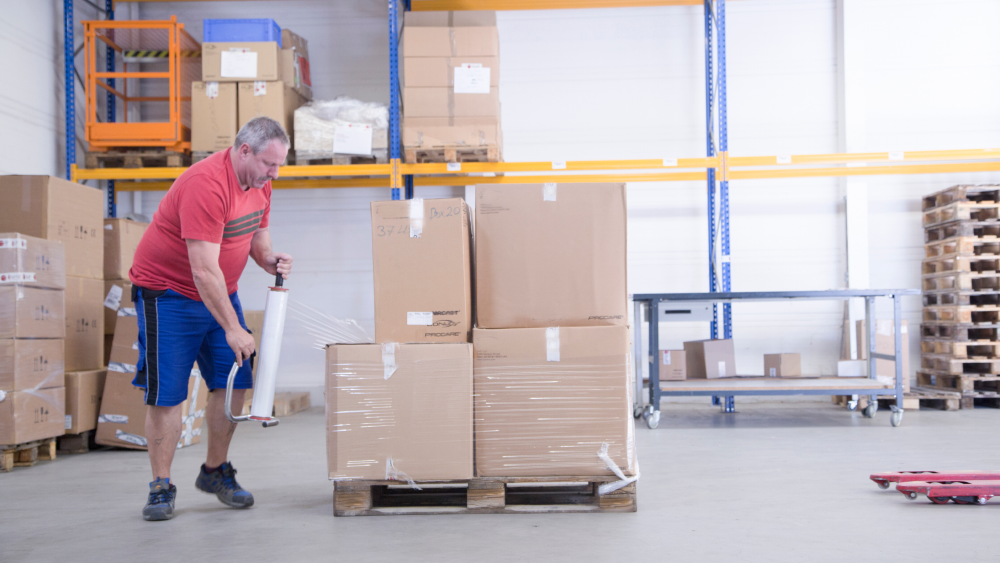
Hand wrapping is also known as manual wrapping, and is the process of using stretch film to secure the boxes or goods on the pallet. To hand wrap a pallet follow these steps:
- Prepare the load: Stack the items evenly on the pallet, ensuring that nothing overhangs the base. Make sure there are no spaces between the boxes and that they are stacked as close together as possible. If they have space to shift during transit, it will loosen the pallet wrap and potentially risk damaging the goods.
- Secure the film to the pallet: After selecting your pallet wrap, secure the film to the pallet. Peel about half a metre of stretch film away from the roll and squeeze it together to make a long rope. This is tied through and around the corner of the pallet to secure it in place.
- Wrap the base tightly: Begin wrapping around the base of the pallet, keeping a consistent and firm stretch on the film. Make sure you wrap it securely enough to ensure stability at the foundation. Aim to wrap around the base about three to four times, while overlapping the layers.
- Build strong layers wrapping upwards: Work your way up from the base wrapping strong layers that overlap each one by at least 50%. This usually means around eight to 13cm overlap.
- Stabilise the top: When you get to the top of the load, wrap with a few extra layers to secure it. Pull the film tight around the corners where the stress is the highest.
- Wrap down the load: This is optional however it is a good idea when wrapping heavy or unstable loads for extra security.
- Secure the wrap: Once wrapping is finished and the goods are sufficiently contained, tear the wrap and stick the end to the pallet or tuck it under one of the pallet edges.
- Check the load stability: To test the load stability, gently push the top of the load. Stable items will not shift which indicates they are ready for transport. If you notice any weak points, apply more film to those specific areas or use supplementary stabilising methods like strapping or corner boards to reinforce the load.
How to Machine Wrap a Pallet
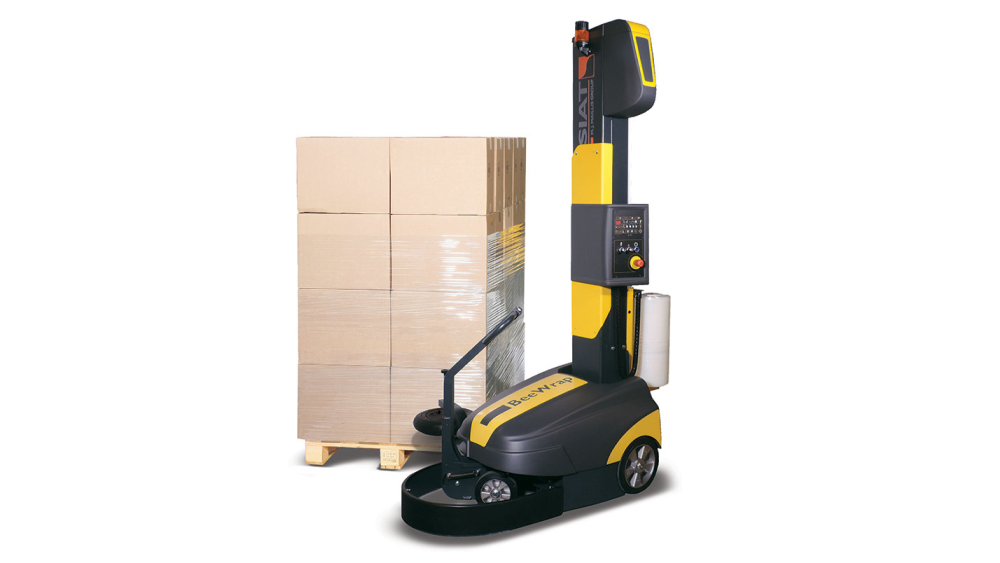
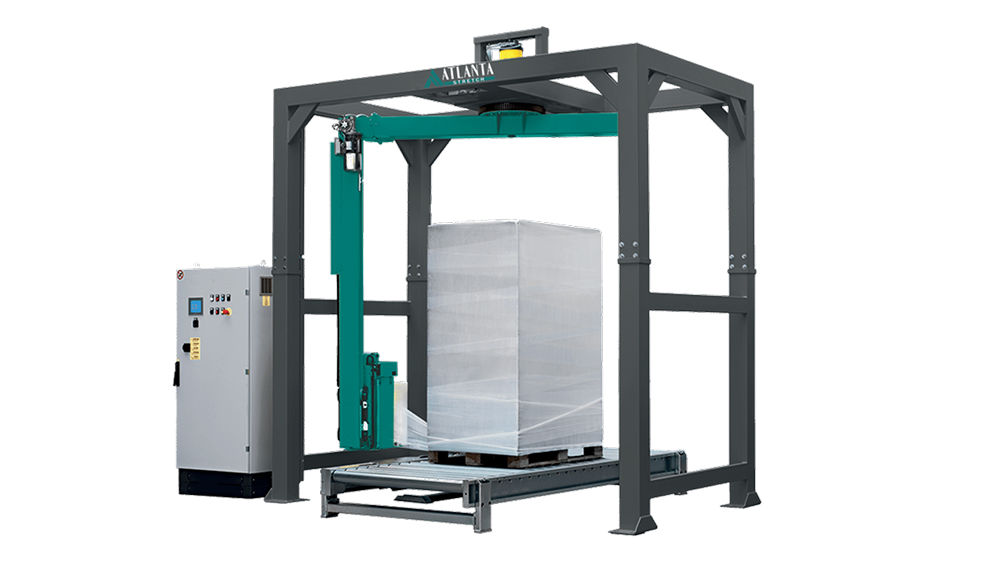
Machine pallet wrappers are excellent for businesses that are seeking consistency, efficiency and safety. They significantly reduce film waste, lead to more secure loads and reduce injuries from repetitive tasks. There are two main types of pallet wrapping machines – semi automatic and automatic. Semi automatic requires some human intervention for each pallet like positioning the pallet on the turntable, and manually placing or removing the stretch film. Automatic pallet wrappers have minimal to no operator involvement. Usually the pallet enters the wrapper via a conveyor belt, wrapping occurs and the exit happens automatically.
To wrap a pallet with a semi automatic pallet wrapping machine, follow these steps:
Prepare and position the pallet and machine
- Load the pallet: Place the pallet on the turntable by using a forklift. Centre the pallet in the middle of the turntable to ensure an even wrap and prevent the load from becoming unstable during the rotation.
- Load the film: Loosen the carriage arm and place the film roll onto the core holder making sure the cling side faces the load. Lock the arm back down and tighten in place.
- Thread the film: Pull about 1.5 metres of film and thread it through the rollers in the carriage.
- Set the tension: Adjust the film tension knob or lever to the desired level to set the tension. The tension you set will depend on the load weight and stability. Start with a lighter tension for irregular loads and increase for heavier ones. As the machine runs you can adjust the tension if it appears too tight or loose. For pre-stretched film, the tension does not need to be as high.
- Set other parameters: Use the control panel to set parameters like the number of bottom/top wraps and carriage speed.
Start the wrapping process
- Start the machine: Once parameters have been set, press the start button to activate the automatic wrapping process.
- Stay in the safe zone of the pallet wrapping machine while it is in operation but continue to monitor it in the case of any defects or faults occurring. Never walk onto the turntable or lean over moving parts while the machine is running.
- Finish the cycle: Once the cycle is finished, the machine will automatically stop. Some machines cut the film while others alert the operator to do so.
- Remove the pallet and inspect: Using a forklift or pallet jack, remove the pallet and inspect for stability before transportation and storage.
Tips for Effective and Safe Pallet Wrapping
- Choose a sturdy pallet: Make sure the pallet is structurally sound and not much larger than the load. This will help to prevent the stretch film tearing and goods moving during transportation.
- Stable stacking: Create a uniform load by placing heavy items on the bottom. Ensure all goods are packed tightly.
- Proper staff training: Make sure any staff member is well trained if operating an automatic or semi automatic pallet wrapping machine. This enables them to work more efficiently and promotes overall safety.
- Regular maintenance: Schedule regular maintenance and servicing of pallet wrapping machines. This will prolong the lifespan and minimise any downtime due to mechanical issues.
The Importance of Proper Pallet Wrapping Techniques
Using the right pallet wrapping techniques is essential for providing the stability and protection of products in transit and storage. When pallets are wrapped properly, it significantly reduces the damage that can occur, saving businesses both time and money. When manual and automated pallet wrapping are done correctly, it has a plethora of benefits. These include:
- Security and safety: Proper pallet wrapping techniques are paramount for safe and secure shipping. When the tension of the stretch film is evenly distributed and keeps the goods contained, the contents are less likely to shift.
- Optimisation of warehouse space: Well wrapped pallets optimise warehouse space by ensuring load stability allowing for easier vertical or horizontal stacking.
- Cost savings: A pallet that is wrapped properly minimises product damage, reducing replacement and return expenses.
Understanding how to wrap a pallet is essential to ensure the safe transportation of goods. Pallet wrapping can be done by hand or via automatic or semi automatic machines. Whether it is to protect fragile items or optimise warehouse space, the importance of pallet wrapping cannot be underestimated. Contract Packaging Systems are the pallet wrapping machine specialists with unrivaled expertise in packaging solutions to bring additional value to your business.
