

April 14, 2026
How to Improve Warehouse Efficiency
Warehouses of all sizes can implement relatively simple changes to boost efficiency levels. This may include optimising with space-efficient equipment, or automation technologies such as packaging machines and advanced picking methods. The digital age also presents new opportunities, with warehouse management software (WMS) giving warehouses access to real-time data to enhance their layouts and forecast future demand. These improvements must be guided by strong leadership, with regular training that instils a positive culture, and safety protocols to prevent any costly accidents.
By improving efficiency, warehouses can maximise productivity from their available resources. As customer demands grow amidst the e-commerce boom, it’s essential to optimise all aspects of a warehouse to control overhead costs, while enhancing both accuracy and output. Improvements in efficiency are essential to improving accuracy, supporting KPI’s and reducing unnecessary costs. This can help a warehouse stay competitive, deliver a more effective operation and ultimately boost profits.
Why Warehouse Efficiency Matters
Efficiency is crucial to the success of a warehouse for the following reasons:
- Meet customer demands – Efficient warehouses that deliver orders fast and with minimal mistakes can lead to improved customer loyalty and satisfaction. This can benefit a warehouse long-term with a more positive relationship and repeat customers.
- Competitive advantage – Efficiency can give your warehouse a competitive advantage within a crowded market. Particularly, when taking advantage of an optimised layout, software and packaging equipment, a warehouse can achieve more with less resources.
- Improved profit margins – By minimising the amount of costly mistakes and unnecessary labour, an efficient warehouse can achieve improved profit margins. This is also linked to improved productivity, as warehouses make the most out of their available space.

13 Tips for Improving Warehouse Efficiency
Improving Equipment and Physical Infrastructure
1. Optimise your warehouse layout for space and travel time
The layout of your warehouse plays an essential role in maximising efficiency. A poorly designed layout can quickly become disorganised and difficult to navigate, creating unnecessary delays and wasted space. Your warehouse layout should be optimised in a way that makes the most efficient use of available space, allowing staff to move seamlessly with minimal travel time.
Efficient layouts should be designed around eliminating non-essential movement, which can be achieved through several strategies. For instance, storing popular, in-demand products closer to the packaging area reduces travel times and keeps any slow-moving stock out of the way. Efficiency can also be improved by utilising vertical space as much as possible. This means adding tall storage units that expand your warehouse storage capacity without increasing the travel distance. Automated Storage and Retrieval Systems (AS/RS) can also be incorporated to quickly retrieve stock that staff can’t reach.
Warehouses should also ensure that there are enough forklifts and dollies for staff use, with clear signage and markings for maximum efficiency.
2. Improve your inventory management with an ABC analysis
A key part of improving the efficiency of your layout is evaluating an ABC slotting strategy. This is a popular organisational system to help warehouses better manage their inventory. This involves prioritising certain items based on their significance.
Under the ABC system, inventory should be classified into three levels:
- “A” items are the most valuable, reflecting 80% of revenue but only 20% of stock. They should be stored in the lower levels for easy access.
- “B” items are medium-value and should be stored in accessible locations in intermediate-height areas.
- “C” items are the least valuable items and should be placed in the least accessible areas.
Performing an ABC analysis can optimise your inventory, reduce wasted time and support using storage space as efficiently as possible.
3. Invest in space-efficient storage equipment
A key aspect of using your available space as efficiently as possible is investing in high-quality storage equipment. This can include shelves, containers, racks, bins and pallets.
Consider the size of any storage equipment you’re looking to purchase, and try to prioritise solutions that maximise storage space, such as stackable containers and double-deep pallet racking. We also recommend opting for shelving units with adjustable heights, so you can maximise any vertical space. With their customisable height, adjustable shelving allows you to store both tall and smaller packages, with the flexibility to change shelf heights as needed.
Stackable containers, crates and pallets are an efficient way to store items vertically in bulk, while also saving space. For lighter items that are rarely used, you could even use your roof space as additional storage, with ceiling-mounted racks, vertical carousels and overhead cabinets.
It’s important to pair your storage equipment with clear and accurate labelling to reduce the time spent searching for items. It is also recommended to carry out regular reviews on how efficiently you’re using your warehouse space for continuous improvement.
4. Improve picking methods
Different picking methods have a direct effect on the productivity and efficiency of your warehouse. Therefore, it’s important to prioritise a picking method that reduces travel time while benefiting from accuracy and output.
The most common picking methods include:
- Single order picking: Where a picker handles just a single order.
- Batch picking: Pickers handle multiple orders in a single trip.
- Cluster picking: Picker handles multiple orders at once, which are organised into clusters.
- Wave picking: Orders are assigned in waves depending on shipping schedules.
- Zone picking: Pickers are assigned to specific zones of the warehouse.
The exact method you choose will depend on the size of your warehouse, the type of stock you have, and the amount of staff you have on site. For example, single order picking may be best suited for smaller inventories, while zone picking is more appropriate for high-volume, larger warehouses.
The aim is to choose a method that balances speed and accuracy to improve the overall efficiency of your warehouse.
5. Embrace new warehouse equipment and automation
By implementing new equipment that automates various tasks, you can significantly reduce human error and improve efficiency. This can allow staff to spend more time on areas that require complex, human judgment.
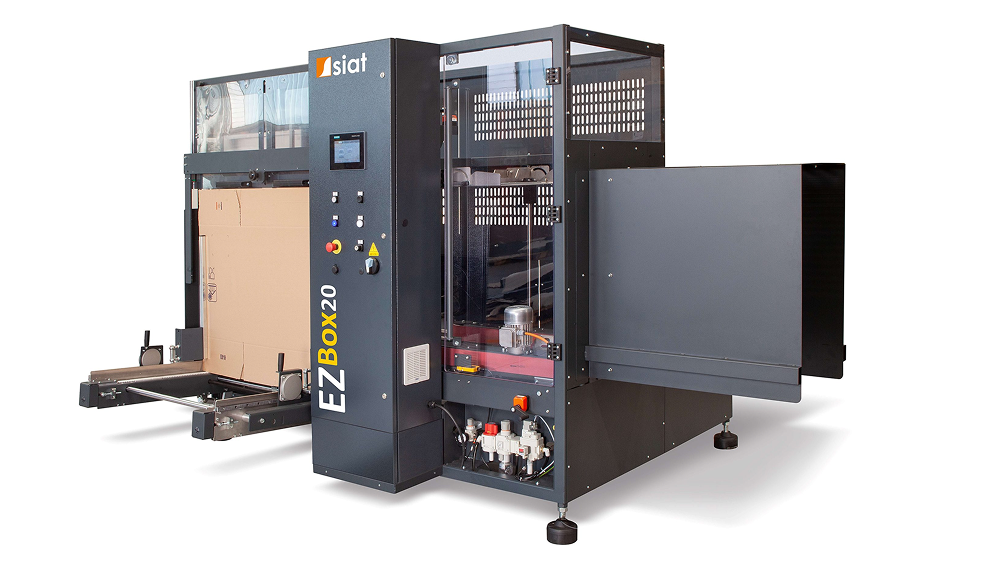
Packaging machines can be implemented throughout a warehouse to automate repetitive tasks. For example, carton erectors can automatically construct cartons around products from flat cardboard sheets. Automatic pallet wrappers can also improve efficiency levels by applying a stretch film around loads for secure, consistent wrapping. Automatic packaging machines can continue operating continuously without breaks, resulting in a constant workflow for improved accuracy and productivity.
Other solutions include automated storage and retrieval systems (AS/RS), which are computer-controlled and incorporate various stacker cranes and shuttles to automatically place and retrieve items. Conveyors can also help streamline the movement of products, with automatic sorters able to direct items based on their size or destination.
6. Look after your warehouse equipment
Warehouses are incredibly reliant on equipment and technology. Therefore, when they break down or experience failures, this can lead to unscheduled downtime that significantly affects the overall efficiency.
Ensure that all equipment, from forklifts to packaging machines, is properly maintained for greater reliability. We recommend incorporating a scheduled servicing routine that incorporates regular equipment checks to ensure everything is functioning correctly. This should also extend to any software, keeping it updated to avoid any bugs or glitches.
People and Culture
7. Get the right leaders
Leaders set the tone for any business, and warehouses are no different. Choosing an effective leader is critical for an effective warehouse, as they can set the tone for a culture of continuous improvement and manage teams effectively. Strong leadership is one of the best ways to promote warehouse efficiency, and you should ensure you choose someone who exemplifies the company culture and presents strong skills in management.
8. Provide quality training
Providing quality training sessions to staff helps to promote a far more efficient warehouse. These sessions should ensure staff know exactly how to operate different equipment and to execute their role as effectively as possible.
Particularly as your warehouse makes strides to improve its efficiency levels, review your training and staff onboarding to ensure it reflects your current operations. This could include training on new software and any online technology. A well-informed workforce is less likely to pick up bad habits and get themselves into accidents, helping to streamline operations and promote greater warehouse efficiency.
9. Create a culture of feedback and innovation
The efficiency of a warehouse is largely dictated by the strength of its workforce, and it’s important that managers make an effort to promote a strong culture. A toxic culture can be challenging, making it easier for staff to misbehave or work unproductively.
An efficient warehouse should empower employees to make their own decisions while encouraging any feedback that promotes a culture of constant improvement. When this culture is promoted from top to bottom, from entry-level staff to management, your warehouse may start to see substantial improvements in efficiency.
Adding robust training programs, promoting teamwork and establishing easy channels of communication can be smart ways to improve staff culture.
10. Take health and safety seriously
Workplace accidents can be extremely dangerous and should be actively prevented. Studies in Australia show that the warehousing sector consistently ranks as one of the most hazardous industries. Your warehouse should have stringent safety protocols in place, with regular training briefings to staff that ensure these protocols are adhered to.
Ensure staff are adhering to all the necessary protocols unique to your warehouse, and ensure all the appropriate PPE, such as helmets, safety glasses and high-visibility jackets, are worn. Safety could also be improved by adding all the necessary signage, labels and safety tools needed to keep staff protected. For more information on Workplace Health and Safety laws, please visit the Safe Work Australia website. These policies are enforced and monitored by state and territory WHS regulators, such as WorkSafe Victoria and SafeWork New South Wales. By ensuring compliance with (WHS) policies you can improve efficiency, provide a duty of care to staff to avoid any serious accidents and create a smooth running factory floor.
Using Data, Metrics and Software
11. Implement WMS software
Adding quality warehouse management software (WMS) can help streamline your warehouse operations by giving you full visibility on your entire inventory. This software can allow for real-time visibility, meaning you can track SKUs from the moment they enter your warehouse to when they are shipped out. This also means you have a more accurate understanding of your stock levels and where each item is, for greater efficiency.
This software can give staff suggestions for the most efficient picking and packing routes to cut down any wasted time. Because it has full access to your inventory levels, a WMS can also automatically trigger a restock if your warehouse passes a certain level. With paper-based systems increasingly outdated, a robust WMS can give you greater control over your warehouse’s inventory for improved efficiency and accuracy.
There is a variety of WMS software available to suit different applications, such as Microsoft Dynamics 365, which assists in optimising supply chain operations. Luminate Logistics by Blueyonder is another intelligent software that utilises both artificial intelligence (AI) and machine learning (ML) for optimisations. If you’re looking for a user-friendly platform with real-time inventory analysis, consider the Manhattan Active Warehouse Management. With so many WMS software options available to businesses, ask around and conduct research to find the right one for you.
12. Use real-time data and metrics for continuous improvement
Particularly in the modern age, it can be challenging to rely on daily reports or weekly data levels for a fast-moving warehouse. Luckily, software such as WMS can provide real-time data and metrics on information such as inventory levels, accuracy, and productivity.
This data can be incredibly useful to managers looking for continuous improvement. It can help redirect staff to in-demand areas of the warehouse, adjust pick routes, identify any bottlenecks and maintain stock levels.
13. Forecast ahead with software
For most businesses and warehouses, there are times of the year that tend to attract greater demand. For example, in the run-up to Christmas, warehouses may experience a surge in demand with greater consumer purchases and higher inventory turnover.
Inventory management software and WMS programs typically have demand forecasting, which can predict future shifts and estimate the amount of goods needed to meet these demands. Using historical data, current trends and any external factors, by forecasting ahead with software, you can prevent any overstocks or understocks from affecting your warehouse.
How to Measure Warehouse Efficiency
It can often be difficult to pinpoint how efficiently your warehouse is operating without first understanding how to accurately measure it. Efficiency can be challenging to quantify, and we recommend the following steps to evaluate a warehouse’s performance:
- Key Performance Indicators (KPIs) – Establishing set KPIs can be an effective way to monitor progress and overall performance levels. For example, to measure layout efficiency, you could establish a KPI for warehouse receiving times that monitors the speed and accuracy of orders. These can be checked periodically, as new measures are introduced to assess whether or not they’re actually improving efficiency levels.
- Regular audits – To ensure any new warehouse processes are running efficiently, we recommend conducting regular audits. This allows you to identify any issues or potential problems that may be affecting productivity. This can be carried out internally, or by a third-party that evaluates processes, staff, equipment and technology.
- Accuracy – The accuracy of your warehouse should be one of the key pieces of data to consider when assessing efficiency. This can be determined by calculating the percentage of orders picked correctly without an error over a set period.
Order picking accuracy = (Number of accurately picked orders / total number of orders picked) x 100
We recommend checking your accuracy levels after any new measures to ensure your warehouse remains as efficient as possible. Improving efficiency ensures productivity is maximised, with fewer errors and a more effective output. By implementing even some of these measures, you can create a safe, strong warehouse team, with a strong competitive advantage in your market.
